
Cooking Line Exteriors
Ranges, fryers, ovens, grills, and adjacent stainless steel can collect carbonized food and layered grease. Cleaning methods are selected for the surface, and controls or electrical parts are protected.
Serving Tampa, Florida & surrounding areas
Open 24/7
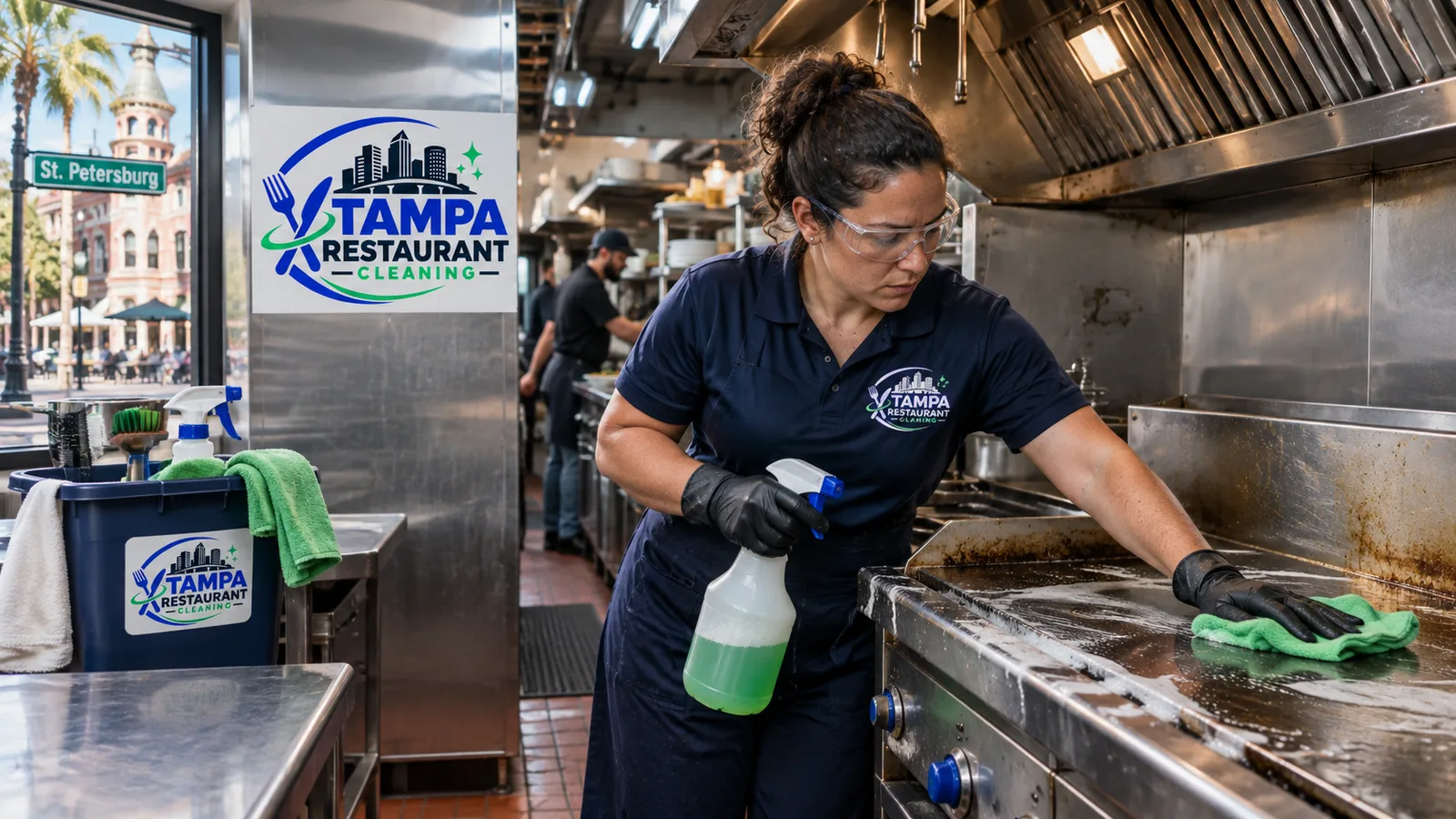
Kitchen Deep Cleaning · St. Petersburg
Remove baked-on grease, food residue, and floor buildup with a detailed cleaning plan built around your equipment, operating hours, and kitchen condition.
Deep Cleaning Scope
Restaurant Kitchen Deep Cleaning St. Petersburg service targets the grease and soil that routine closing work leaves behind. The scope can include cooking equipment exteriors, accessible areas beneath and behind movable units, stainless steel surfaces, prep areas, walls, baseboards, floor edges, and other agreed kitchen surfaces. The goal is a cleaner workspace with less residue collecting around equipment and traffic lanes.
A useful deep clean starts with the kitchen layout and the way the restaurant operates. A compact kitchen near downtown may have tightly spaced equipment and limited staging room. A waterfront operation may need cleaning arranged around deliveries, service periods, and heavy guest traffic. Restaurants in commercial areas such as Gateway often have larger production areas or several floor zones. These conditions affect access, crew size, sequencing, and the time needed for the work.
Tampa Restaurant Cleaning is based at 1102 N Rome Ave, Suite 4, Tampa, FL 33607. Our team of Tampa's restaurant service specialists plans St. Petersburg kitchen work around the actual facility rather than using a one-size-fits-all checklist. Before cleaning begins, the scope should identify included equipment and surfaces, access restrictions, shutdown requirements, and any areas that need special handling.
Detailed Kitchen Coverage
The exact checklist depends on the kitchen, but a thorough scope commonly addresses grease films on equipment exteriors, residue around range and fryer lines, splash marks on washable walls, buildup along baseboards, and soil in accessible gaps. Stainless steel is cleaned with products and tools suited to the finish, while painted walls, tile, grout, rubber flooring, and quarry tile require their own methods.
Degreaser needs enough dwell time to loosen oily soil before agitation and removal. Heavy buildup may require repeat applications, hand scraping with surface-safe tools, or focused work around casters and equipment legs. Cleaners should control overspray near electrical components, pilot assemblies, controls, food-contact items, and sensitive finishes. Food and utensils must be removed or protected before work starts.
Deep cleaning is different from exhaust-system service. Hood ducts, fans, and rooftop exhaust components require their own specialized scope. Likewise, pest treatment, equipment repair, and grease-trap pumping are separate tasks. Clear boundaries prevent important work from being assumed rather than scheduled.
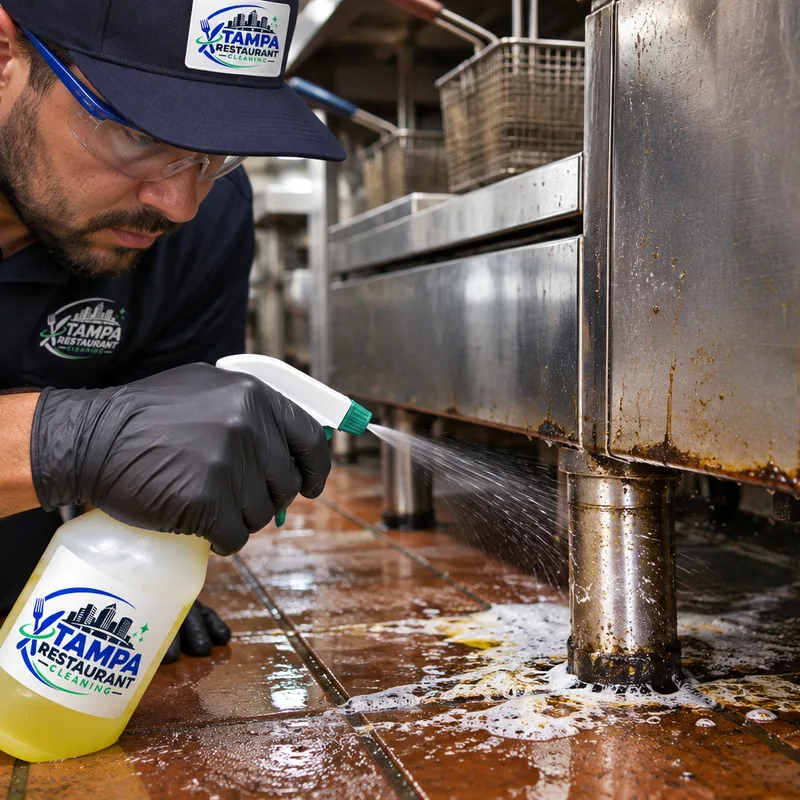
Priority Cleaning Zones
Ranges, fryers, ovens, grills, and adjacent stainless steel can collect carbonized food and layered grease. Cleaning methods are selected for the surface, and controls or electrical parts are protected.
Accessible voids often hold crumbs, grease, packaging debris, and residue around casters. Equipment is moved only when it is safe, permitted, and included in the agreed scope.
Backsplashes, table legs, shelving exteriors, sink surrounds, and washable wall surfaces are cleaned without treating every material as if it were stainless steel.
Baseboards, floor-wall junctions, door frames, kick plates, drains, and corners need hand detailing because large floor tools cannot make full contact.
When included, empty and accessible floors, thresholds, shelving exteriors, and door surfaces can be cleaned with attention to temperature, drainage, and product protection.
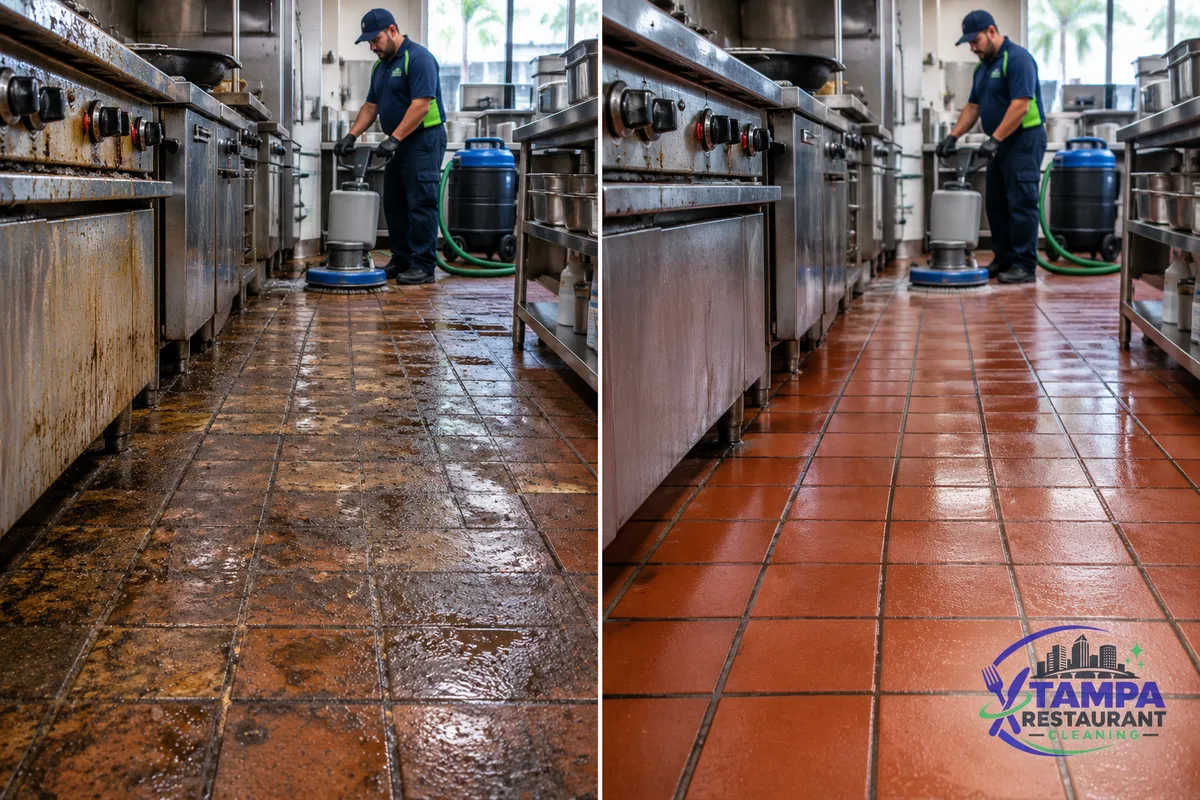
Traffic lanes and cooking stations are treated for embedded soil and grease, with extra attention to grout lines, transitions, corners, and areas around fixed equipment.
Floor and Grout Detail
Restaurant Floor Cleaning St. Petersburg work should match the flooring material and the type of soil present. Quarry tile and textured commercial tile can trap greasy residue in low points and grout lines. Vinyl and rubber floors may be damaged by overly aggressive chemicals, stiff tools, or excess water. Concrete has different absorption and finishing concerns. Testing an inconspicuous area helps determine a safe method when the material or coating is uncertain.
The basic sequence is dry debris removal, controlled chemical application, dwell time, agitation, soil recovery, rinsing when appropriate, and drying. Deck brushes or low-speed floor machines may be used where access and material allow. Edges, drains, transitions, and the narrow areas between equipment usually require hand work. Wastewater must be managed carefully rather than pushed outdoors or into a storm drain.
Florida humidity can slow drying, especially in enclosed kitchens with limited air movement. Cleaning should therefore be scheduled with enough time for the floor to dry before employees return to normal traffic. Fans and ventilation may help when their use is suitable for the facility. A greasy floor may look improved before it is fully dry, so the final condition should be assessed after residue and rinse water have been removed.
From Review to Reset
Step 1 of 5
The first step identifies floor materials, equipment arrangement, grease severity, access limits, water and drainage considerations, sensitive surfaces, and the restaurant's available service window.
Step 2 of 5
Food, utensils, small appliances, mats, and movable items are removed or protected as agreed. The crew confirms shutoffs, equipment temperature, electrical hazards, and which units may be moved.
Step 3 of 5
Appropriate products are applied with controlled dwell time. Technicians agitate stubborn soil and detail equipment exteriors, washable walls, bases, legs, edges, and accessible gaps.
Step 4 of 5
The floor is treated according to its material. Grease and suspended soil are recovered, grout and edges receive focused work, and rinse residue is removed where the method calls for rinsing.
Step 5 of 5
Included surfaces are checked after cleaning. Movable items are returned as agreed, the work area is left orderly, and any stains, damage, inaccessible buildup, or maintenance concerns are documented.
A deep clean is easiest to manage when the restaurant defines a realistic shutdown window. Equipment must be cool enough to work around safely, food needs protection, and cleaned floors need drying time. Overnight or closed-day scheduling may reduce interference, but the right timing depends on staff availability, building access, nearby occupants, noise limits, and the amount of buildup.
Restaurants around Central Avenue may have constrained loading or rear access, while kitchens near the St. Pete Pier and waterfront may need work coordinated around event traffic and peak dining periods. In Grand Central District, close-set commercial spaces can limit equipment staging and wastewater handling options. These details belong in the work plan because they affect what can be completed within a service window.
Pinellas County restaurants operate under food-safety oversight that may include the Florida Department of Business and Professional Regulation or the Florida Department of Agriculture and Consumer Services, depending on the establishment type. A professional deep clean can support the restaurant's sanitation program, but it does not replace required daily cleaning, employee hygiene procedures, pest control, equipment maintenance, or regulatory inspections.
Clear Pricing Context
Commercial kitchen deep cleaning is priced after the work is defined because square footage alone does not show the labor involved. A small kitchen with thick, carbonized grease and immovable equipment may require more detail work than a larger, regularly maintained space. The number of cooking appliances, floor material, grout condition, wall coverage, ceiling height, drain access, and the distance between equipment all affect labor.
Other cost drivers include whether the kitchen is empty and cool on arrival, whether equipment can be moved safely, the amount of hand scraping required, parking and loading access, wastewater recovery needs, and the length of the available cleaning window. Restricted scheduling can change crew planning. Add-on areas such as walk-ins, dry storage, dish rooms, or front-of-house floors should be listed separately so the written scope is clear.
Photos can help with early planning, but an on-site review may be needed for heavy buildup, mixed floor materials, or tightly packed equipment. The final proposal should state what will be cleaned, what is excluded, what the restaurant must prepare, and how much operating downtime to allow.
Request a CallbackGet a written kitchen-cleaning scope based on your equipment, floors, access, and operating schedule before the work begins.
Call for a Free QuoteCommon Questions
A small, prepared kitchen may be completed within one service window, while a large kitchen or one with heavy grease can require a longer shutdown or phased work. Equipment density, accessible floor area, buildup severity, and drying conditions all affect timing. Florida humidity can extend floor-drying time in kitchens with limited air movement, so reopening plans should include a drying allowance.
Yes, overnight cleaning is often possible when the kitchen can be cleared, equipment can cool, and the crew has enough time to clean and dry the agreed areas before opening. St. Petersburg restaurants with restricted loading access or nearby occupants may need extra coordination. The restaurant should confirm entry, alarms, keys, parking, shutdown responsibilities, and the required completion time in advance.
Equipment is moved only when it is safe, authorized, and included in the scope. Gas lines, hardwired connections, rigid plumbing, weight, floor condition, and manufacturer requirements can prevent movement. If an appliance cannot be moved, the crew can define which exposed and accessible areas are reachable without disconnecting or damaging it.
Hood surfaces may be included if specifically listed, but exhaust ducts, fans, and rooftop components require a separate specialized scope. Those systems involve access and fire-safety considerations beyond ordinary kitchen-surface cleaning. The proposal should distinguish visible hood cleaning from full exhaust-system service.
Heavy grease can often be reduced substantially in one visit, but permanent staining, missing grout, damaged coatings, or deeply absorbed soil may remain. Quarry tile, vinyl, rubber, and concrete require different chemistry and agitation. An inspection helps separate removable buildup from wear or material damage before Restaurant Floor Cleaning in St. Petersburg is scheduled.
Staff should remove or protect food, utensils, small equipment, paper goods, and personal items from the work zone. Cooking equipment should be shut down and cool at the agreed time. Access routes, water availability, drains, alarms, parking, and any equipment that must remain energized should be discussed before the appointment.
The right frequency depends on cooking volume, menu, equipment, daily cleaning quality, floor texture, and grease production. Fry-heavy kitchens may need targeted attention more often than low-grease operations. A practical schedule is based on observed buildup at cooking lines, equipment gaps, grout, baseboards, drains, and other places that routine closing work does not fully reach.
Plan Your Kitchen Cleaning
Describe your St. Petersburg kitchen, floor materials, equipment layout, problem areas, and preferred service window. Tampa Restaurant Cleaning will use those details to prepare a clear scope for the work.