
Tile Surface Cleaning
Agitation lifts greasy films and embedded soil from textured tile that mopping may leave behind. The method is selected to avoid unnecessary abrasion.
Serving Tampa, Florida & surrounding areas
Open 24/7
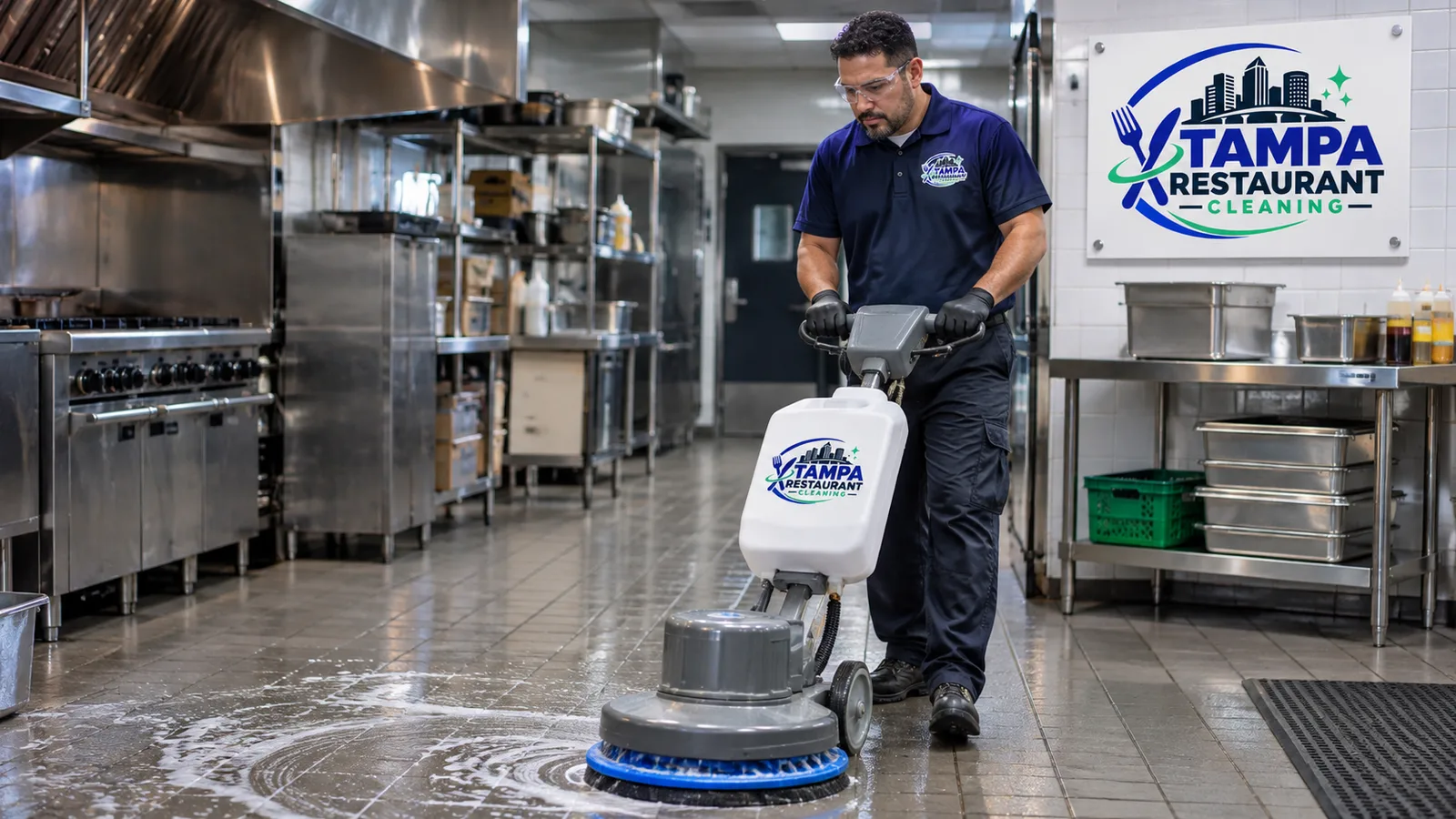
Kitchen Floor Service · Tampa
Remove built-up grease, food residue and embedded soil with a floor cleaning plan built around your kitchen surfaces, operating hours and safety needs.
Floor Care Built Around Service
Commercial Kitchen Floor Cleaning requires more than a quick mop at closing. Grease films, tracked-in soil and residue around fryers, cook lines and dish areas can settle into textured tile and porous grout. If that buildup is not removed correctly, the floor may remain dull, sticky or slippery even after routine cleaning.
Tampa Restaurant Cleaning provides focused restaurant floor cleaning services for kitchens and other hard-floor work areas. Our work as an experienced restaurant service team in Tampa is planned around the floor material, soil load, equipment layout and hours when the kitchen is available. Our address on North Rome Avenue places us close to restaurant corridors in West Tampa and nearby districts.
The goal is a practical result: break down greasy residue, recover the appearance of tile and grout, address difficult edges and leave the floor ready for normal operations. Before work begins, we identify sensitive areas, discuss access and agree on a written scope.
High-Soil Kitchen Zones
Kitchen floor degreasing starts with the type and amount of buildup. Frying oils, animal fats, sauces and fine food particles can create layered soil that ordinary neutral cleaner does not remove. A suitable commercial degreaser needs correct dilution and dwell time so it can loosen the residue before agitation. Using too much chemical or allowing dirty solution to dry can leave a film behind.
We concentrate on the places where grease tends to collect: beneath movable equipment, around cook lines, near floor drains, along base edges and across routes between preparation and warewashing areas. Mechanical scrubbing may be used where the flooring and access allow it. Detail brushes help work solution into grout joints, corners and textured surfaces. The loosened soil is then recovered rather than pushed into another part of the kitchen.
Floor drains are kept clear of loose debris, and runoff is controlled during service. Chemical choice and agitation are adjusted for ceramic or quarry tile, sealed concrete and other compatible commercial flooring. Any damaged grout, failed coating or loose tile found during cleaning is reported because cleaning cannot repair a failed surface.
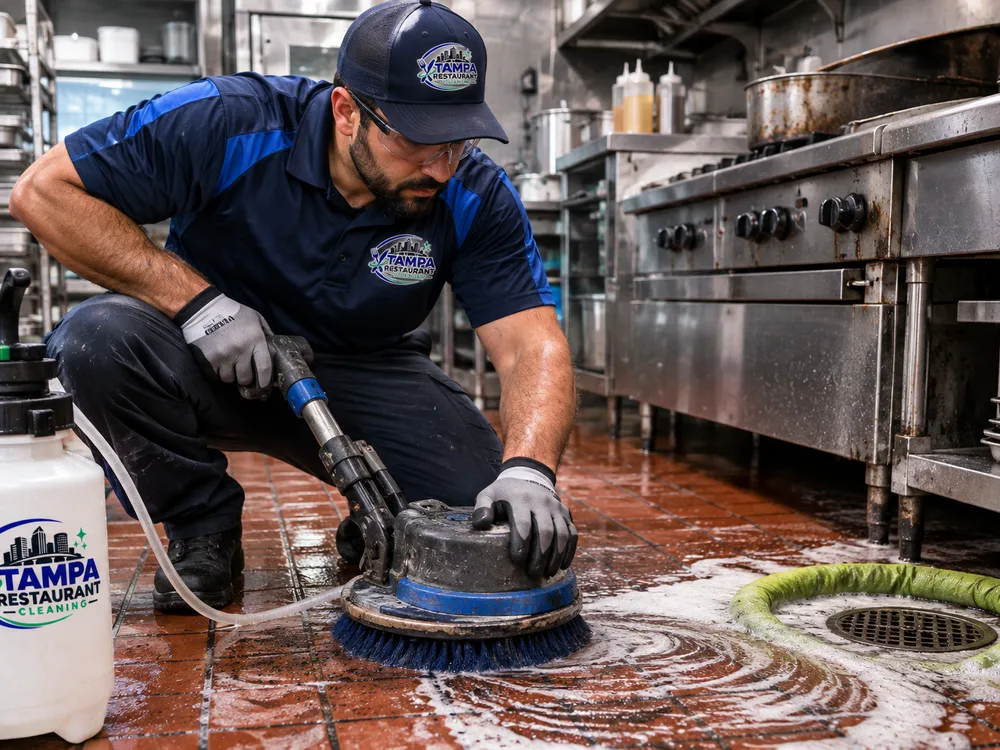
Detailed Floor Coverage
Agitation lifts greasy films and embedded soil from textured tile that mopping may leave behind. The method is selected to avoid unnecessary abrasion.
Grout joints receive focused chemical dwell and brushing where appropriate. Cleaning can improve heavily soiled grout, but permanently stained or deteriorated joints may require repair.
Hand detailing targets wall lines, corners, thresholds and accessible equipment edges where larger machines cannot reach.
Dirty solution is collected after agitation so dissolved grease and suspended soil are removed instead of redistributed across the floor.
A controlled rinse helps remove loosened residue and excess cleaner. The floor is then inspected for remaining trouble spots.
Loose tiles, open grout joints, worn coatings and drainage concerns noticed during the work are documented for the restaurant's attention.
From Inspection to Turnover
Step 1 of 6
We identify the flooring material, grease concentration, grout condition, drains, thresholds and equipment that can be moved safely. We also confirm which areas must remain available.
Step 2 of 6
Loose debris is removed, movable items are cleared by agreement and nearby surfaces are protected as needed. Safety signs and work boundaries help control access.
Step 3 of 6
A compatible cleaner or degreaser is mixed for the surface and soil level. It is applied evenly and given appropriate dwell time without being allowed to dry.
Step 4 of 6
Commercial scrubbing equipment and detail tools loosen buildup across open floor areas, grout lines, corners and accessible equipment perimeters.
Step 5 of 6
The suspended soil and cleaning solution are recovered. Rinsing removes remaining residue, with water use managed around floor drains and adjacent work areas.
Step 6 of 6
We review the cleaned floor, address reachable trouble spots and discuss drying time or any surface defects that need separate repair.
Serving Tampa Operators
Restaurant layouts and operating patterns vary across Tampa. Ybor City dining rooms and kitchens may occupy older commercial buildings where tight back-of-house access can limit machine size. In Downtown Tampa, loading access and building rules can affect arrival, equipment movement and service timing. Hyde Park and SoHo restaurants often need work planned around evening traffic, while West Tampa locations may have compact kitchens where the floor must be cleaned in controlled stages.
Florida's humid climate also matters after wet cleaning. Mechanical recovery and airflow are preferable to leaving excess water on the floor, especially where staff need to return soon after service. Drying expectations should be agreed on before work begins rather than assumed.
For kitchens regulated as food service establishments, floor care also supports everyday sanitation practices. The Florida Department of Business and Professional Regulation regulates many public food service establishments in the state. Cleaning does not replace maintenance or an operator's food-safety duties, but a documented floor cleaning routine can make recurring buildup easier to manage.
Pricing Context
Commercial kitchen floor cleaning in Tampa typically ranges from about $0.25 to $0.75 per square foot, while small or heavily soiled jobs may carry minimum service charges of roughly $250 to $500. Intensive degreasing, grout detailing and difficult equipment access can increase the total.
Final pricing depends on floor area, material, grease buildup, grout condition, drainage, required chemical dwell time, movable equipment and whether work must occur overnight. The written price is confirmed after an inspection or a review of accurate measurements, photographs and operating requirements.
Request a CallbackGet a cleaning scope built around your floor material, kitchen schedule and highest-soil areas before service is placed on the calendar.
Call for a Free QuoteCommon Questions
The right interval depends on cooking volume, menu, flooring texture and the effectiveness of daily cleaning. A kitchen with fryers and heavy oil use may need more frequent deep degreasing than a lower-volume operation. We inspect residue around cook lines, grout joints and traffic routes, then recommend an interval that supports the restaurant's daily floor-care routine.
Yes, service can be planned for an agreed period when the kitchen is out of production and the floor can remain clear. Downtown Tampa loading rules, shared building access or late-night operating hours may affect the schedule. We confirm entry, equipment movement, water access and the time available for drying before work is booked.
No, cleaning can remove removable grease and soil, but it cannot reverse permanent staining, erosion or chemical damage. Open, cracked or missing grout requires repair rather than stronger cleaning. We can identify visible defects during the floor inspection so expectations are clear before restaurant grout cleaning begins.
Movable equipment can be addressed when access, utility connections and safety conditions permit, but heavy or fixed appliances are not moved without prior agreement. Casters may be locked, gas lines may restrict movement and some units require qualified disconnection. The scope states which equipment perimeters and spaces underneath are accessible.
Drying time varies with floor texture, grout, ventilation, indoor humidity and how much solution can be mechanically recovered. Tampa's humid conditions can slow evaporation, so recovery and airflow matter. We discuss a realistic reopening window after reviewing the kitchen and avoid promising a fixed drying time without seeing the conditions.
Many quarry tile and sealed concrete floors can be professionally cleaned, but the method must suit the surface and its condition. Quarry tile often needs focused agitation in grout joints, while sealed concrete requires care around worn or failing coatings. A test area may be appropriate if the finish, previous chemicals or maintenance history is uncertain.
Remove food, small floor items and loose debris, then confirm which movable equipment will be cleared. Staff should also identify damaged tiles, active leaks, utility restrictions and areas that must stay open. For a Tampa restaurant with shared loading or secured building access, arrange entry and parking instructions before the crew arrives.
No, professional floor cleaning supplements the restaurant's daily sweeping, spill response and mopping routine. Deep cleaning targets residue that has bonded to textured tile, grout and edges over time. Daily use of correctly diluted floor cleaner and clean mop water can help prevent rapid film buildup between scheduled services.
Plan Your Floor Cleaning
Tell Tampa Restaurant Cleaning about your flooring, grease trouble spots and preferred service window. We will review the conditions and outline a practical cleaning scope for your restaurant.