Cooking-Line Detail Cleaning
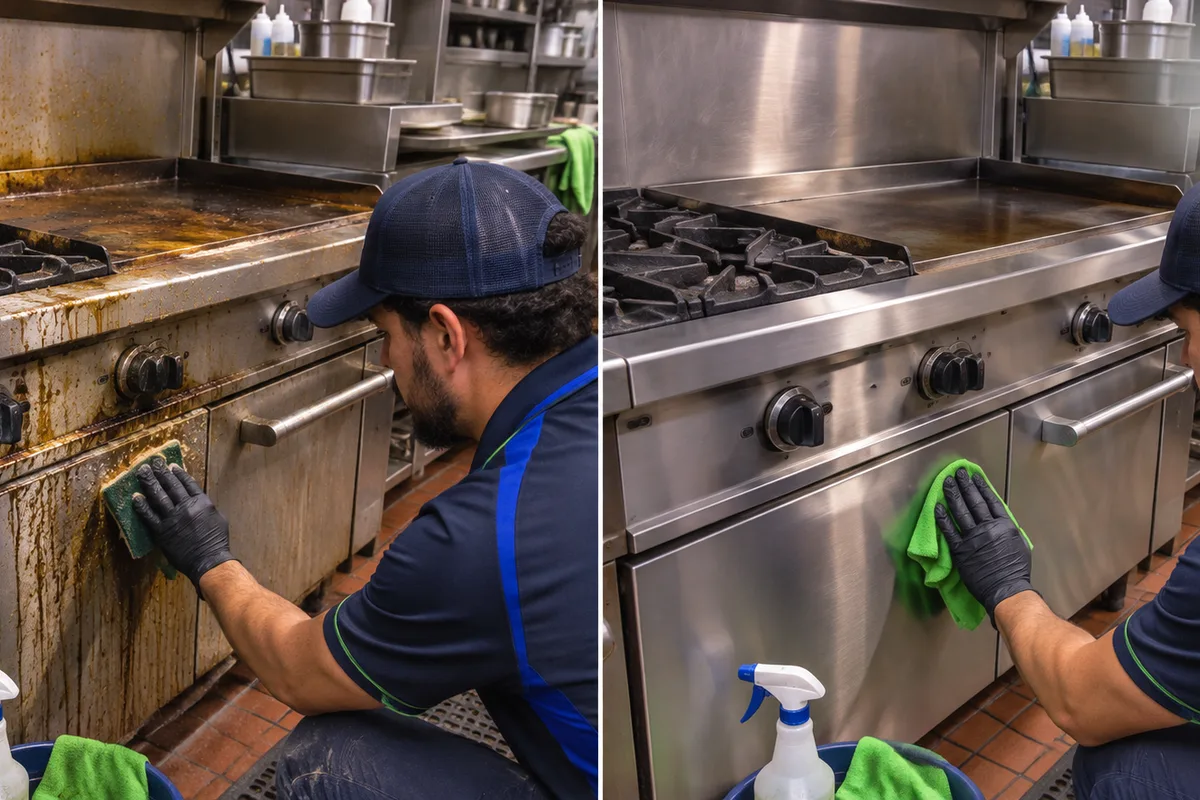
Degreasing of accessible equipment exteriors, adjacent walls, splash areas, floors, and reachable spaces beside or beneath movable units.
Serving Tampa, Florida & surrounding areas
Open 24/7
Restaurant Cleaning Service · Tampa
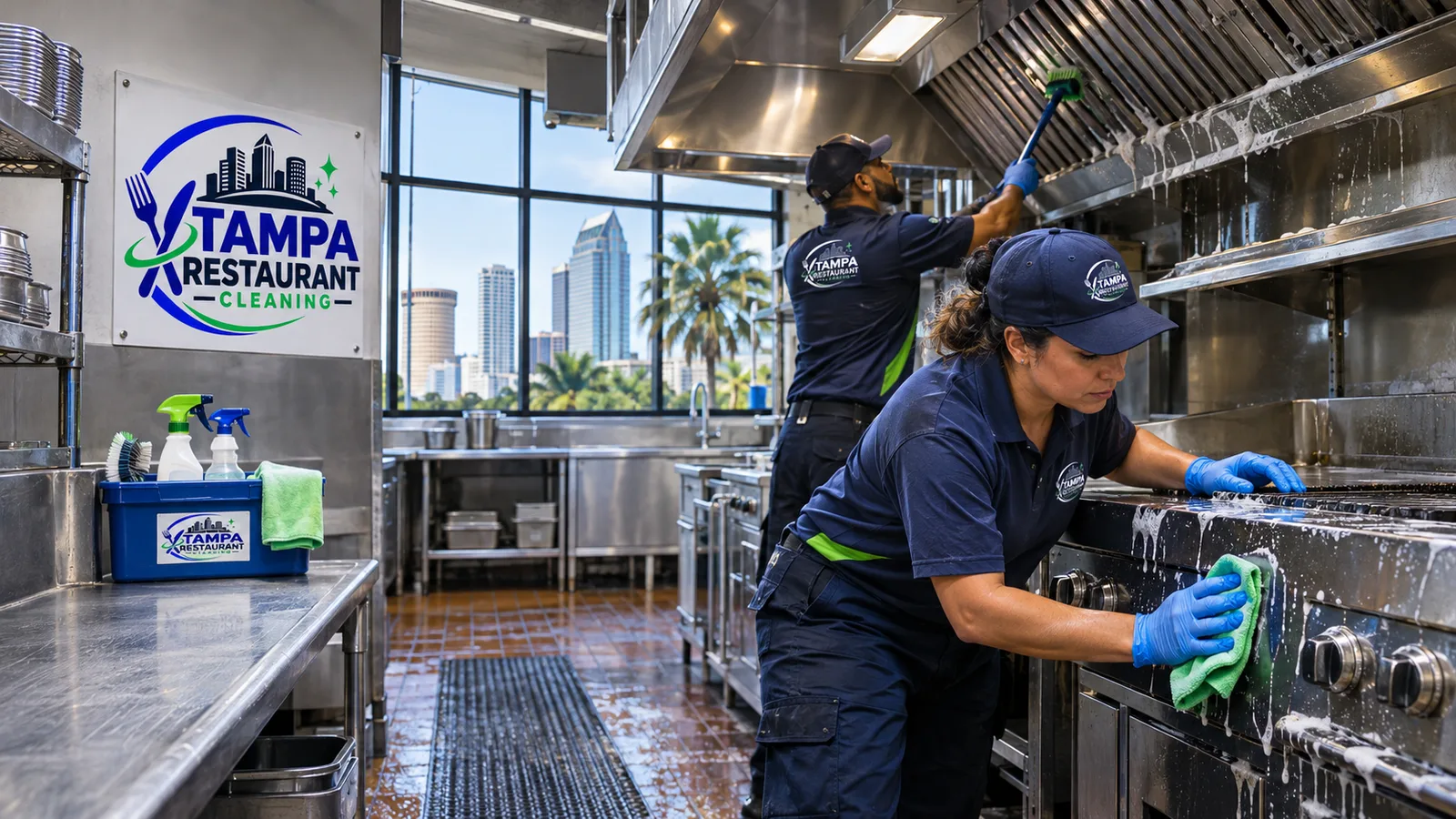
Detailed commercial kitchen cleaning planned around your operating hours, equipment, problem areas, and food-service environment.
Cleaning Planned for Food Service
Tampa Restaurant Cleaning provides professional deep cleaning for commercial kitchens, walk-in coolers, storage areas, dining spaces, and hard-to-reach surfaces. As a Restaurant Cleaning Company, we focus on the accumulated grease, food residue, dust, and soil that routine closing work may leave behind.
Every restaurant has different equipment, hours, and access limits. A hood line needs a different plan than a walk-in cooler, while a high-volume kitchen may require work in phases to avoid disrupting prep. Our team identifies the surfaces to be cleaned, discusses sensitive equipment and shut-down requirements, and builds a written scope around the actual condition of the property.
Based at 1102 N Rome Ave, Suite 4, Tampa's local restaurant service performs the work with practical attention to scheduling, access, and the demands of an operating food business. The goal is a clean, usable space that your staff can return to without sorting through an unclear or unfinished scope.
Beyond Routine Closing Work
Kitchen deep cleaning targets buildup beyond ordinary wiping, sweeping, and mopping. Depending on the agreed scope, work may cover cooking-line exteriors, equipment sides and backs, stainless steel surfaces, walls, floors, baseboards, shelving, drains, and accessible areas beneath movable equipment.
Grease behaves differently across a kitchen. Heat can bake residue onto surfaces near fryers, ranges, and ovens, while airborne grease settles on ledges and other elevated areas. Effective cleaning starts with the right dwell time for the soil and surface. Agitation and controlled rinsing or extraction then remove the loosened material. Food-contact surfaces require suitable products and must be left ready for the restaurant's required sanitizing procedures.
We distinguish detailed kitchen cleaning from exhaust-system work. Hood interiors, fans, and ductwork may require a qualified exhaust-cleaning provider and should not be treated as ordinary surface cleaning. Defining those boundaries before work starts prevents gaps in the restaurant's maintenance plan.
Detailed Cleaning Coverage
Degreasing of accessible equipment exteriors, adjacent walls, splash areas, floors, and reachable spaces beside or beneath movable units.
Cleaning for accessible floors, walls, shelving, door surfaces, handles, and gaskets after food is removed or protected according to the agreed plan.
Removal of settled dust and debris from reachable ledges, pipes, vents, light housings, and other elevated surfaces using suitable access equipment.
Focused attention for corners, baseboards, shelving, doors, wall edges, and other areas that can be missed during routine shifts.
Deep cleaning for floors, service stations, accessible fixtures, and high-touch surfaces when these areas are included in the scope.
Recurring service based on kitchen volume, soil buildup, operating schedule, and the areas your staff can reasonably maintain between visits.
Specialized Cleaning Areas
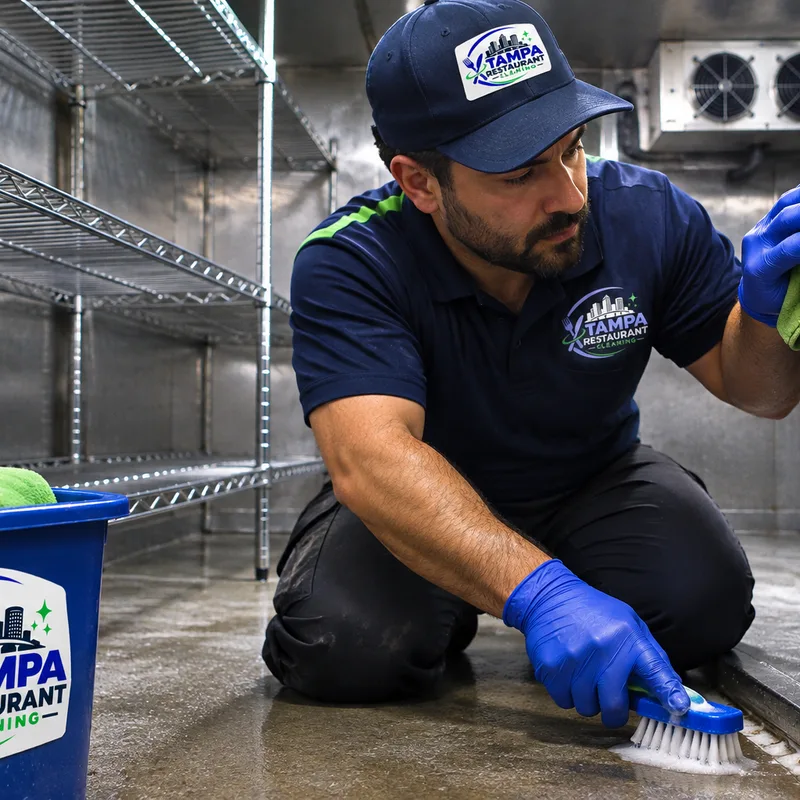
Walk-in cooler cleaning requires coordination before the crew begins. Food must be removed, consolidated, or securely protected, and shelves may need to be cleared. The cleaning method must account for cold surfaces, moisture control, stored products, and access around evaporator components. The scope should identify whether shelving, gaskets, walls, floors, drains, and door surfaces are included. Cleaning should never involve spraying electrical or mechanical components without an appropriate procedure.
High dusting in Tampa restaurants often concerns exposed ceilings, duct exteriors, conduit, pipes, light housings, and upper ledges. These areas collect dust and airborne residue, especially near active cooking zones. Safe access and debris control matter because material dislodged overhead can fall onto equipment and preparation surfaces. High work is therefore sequenced before lower surfaces are finished, with food and sensitive equipment covered or removed as needed.
Tampa's warm, humid climate can make moisture control especially important in coolers and enclosed back-of-house spaces. Cleaning can remove surface soil, but an active leak, drainage defect, failed door gasket, or refrigeration problem needs repair rather than repeated cleaning.
From Walkthrough to Review
Step 1 of 5
We review the kitchen, cooler, storage, service, and dining areas requested by the customer. The walkthrough identifies heavy buildup, sensitive surfaces, access concerns, and equipment that may need to cool down or be moved by authorized staff.
Step 2 of 5
The written scope states which surfaces and areas are included, what preparation is required, and when the crew can work. Overnight, off-day, or phased scheduling may be considered when it fits the restaurant's operations.
Step 3 of 5
Food, utensils, smallwares, and sensitive items are removed or protected as agreed. The crew sets up access, contains debris where needed, and follows the planned cleaning sequence.
Step 4 of 5
When high dusting is included, elevated surfaces are addressed before equipment exteriors, walls, shelving, edges, and floors. Products, dwell times, agitation, and removal methods are selected for the surface and type of soil.
Step 5 of 5
The finished areas are checked against the agreed work list. Any condition requiring repair, specialty exhaust work, pest treatment, or another trade can be identified for the operator's follow-up.
Serving Tampa Operators
The cleaning plan should match the restaurant, not a generic checklist. In Ybor City, restaurants in older commercial buildings may have tight back-of-house layouts, narrow access routes, and elevated surfaces that require careful staging. Downtown Tampa operators often need precise loading and service timing because crews share access with deliveries, staff, and nearby businesses.
Hyde Park and South Tampa dining rooms may require the crew to move quietly between guest-facing finishes and compact kitchen areas without damaging wood, stone, coated metal, or decorative surfaces. West Tampa businesses can also occupy converted or mixed-age commercial spaces where wall materials, flooring transitions, and equipment clearances vary within one property.
Local operating conditions matter too. Heavy rain can affect loading, floor protection, and the movement of hoses or equipment between a vehicle and the kitchen. A professional restaurant deep cleaning plan accounts for access before arrival rather than letting weather or a tight service corridor dictate the work after the crew is set up.
Choosing a Cleaning Crew
Ask for a scope that names the rooms, surfaces, and equipment exteriors to be cleaned. Terms such as “deep clean” can mean very different things, so the proposal should state whether high dusting, cooler interiors, equipment movement, floor edges, drains, shelving, and dining areas are included.
Confirm who prepares the kitchen. Restaurant staff may need to remove food, cool equipment, empty shelves, disconnect approved items, or arrange access. Ask how the crew protects food-contact surfaces and what happens if technicians find damaged flooring, active leaks, loose electrical components, pest evidence, or buildup inside an area outside the agreed scope.
A reliable company will also separate ordinary kitchen cleaning from regulated or specialty work. Commercial exhaust ducts and fans, fire-suppression components, pest control, refrigeration repair, and hazardous-material remediation require distinct procedures and may require other qualified providers. Clear boundaries protect the restaurant and allow each contractor to handle the work they are equipped to perform.
Get a written cleaning scope based on your kitchen's condition, access, equipment, and operating schedule before work begins.
Call for a Free QuoteCommon Questions
Pricing depends on square footage, grease level, equipment density, access, and the exact areas included. A compact kitchen needing surface detailing differs greatly from a full-property project with a walk-in cooler and high dusting. An on-site or well-documented assessment is the best way to establish a useful written price.
Yes, after-hours work may be scheduled when crew availability, building access, and the requested scope allow it. Tampa restaurants with late service, shared loading areas, or residential neighbors may need a carefully defined arrival and completion window. Equipment cooldown and staff preparation also affect the start time.
The duration can range from part of a shift to multiple work periods, depending on kitchen size, buildup, access, and whether cooler cleaning or elevated work is included. A walkthrough establishes crew needs and determines whether the work should be completed at once or in phases.
Light or approved movable items may be repositioned when the scope and site conditions permit, but heavy, connected, or fixed equipment usually requires restaurant staff or a qualified technician. Gas, electrical, water, and fire-suppression connections should not be disturbed as part of ordinary cleaning.
Food should be removed, consolidated, or protected according to the agreed plan, and shelves may need to be cleared before the crew arrives. Tampa's warm climate makes product temperature control especially important, so the operator should arrange safe temporary storage and limit unnecessary door-open time.
Yes, elevated dusting is generally performed before lower surfaces and floors so fallen debris can be removed during the remaining work. Food, utensils, preparation surfaces, and sensitive equipment should be removed or covered before overhead cleaning starts.
Surface cleaning around the hood line does not automatically include exhaust ducts, fans, or fire-suppression components. Those systems require a separately defined scope and may need a qualified specialty provider. The proposal should identify the boundary clearly before the scheduled service.
Plan Your Cleaning Scope
Describe the areas that need attention, your operating schedule, and any access limits. Tampa Restaurant Cleaning will help define a practical scope for the kitchen, cooler, high surfaces, and other requested restaurant areas.